Global Economy Braces for Impact: Strait of Hormuz Closure Threatens Energy Crisis

Key Takeaways
- The Strait of Hormuz, a crucial energy transit route, is facing potential disruption following reported attacks and warnings.
- Approximately 20% of global oil consumption and 20% of global LNG trade pass through the strait daily, making its closure a significant threat to energy supplies.
- Shipping companies are already rerouting vessels, anticipating delays and increased costs, even without a formal blockade.
- Alternative export routes are insufficient to compensate for a complete shutdown, potentially leaving a substantial portion of Gulf exports stranded.
- A closure could trigger a sharp rise in oil prices, impacting consumers through higher gas prices and increased transportation costs.
Tensions in the Persian Gulf have escalated dramatically, raising the specter of a shutdown of the Strait of Hormuz. This narrow waterway, the world's most critical energy chokepoint, funnels a staggering 20 million barrels of oil and petroleum products each day, representing about one-fifth of global demand. Recent reports of attacks on tankers and warnings from Iranian Revolutionary Guards have sent shockwaves through global markets, prompting immediate action from shipping companies.
The implications of a disruption are far-reaching. Beyond oil, the Strait of Hormuz is also a vital artery for liquefied natural gas (LNG), with approximately 20% of global LNG trade flowing through the corridor. Qatar, the world's largest exporter of LNG, relies almost entirely on the strait to reach its customers, particularly in Asia. A blockade could leave Asian economies scrambling for alternative energy sources, potentially crippling industries and impacting electricity generation.
Even without a formal closure, the mere threat of disruption is having a tangible effect. Vessel traffic in the strait has already plummeted, with ships diverting routes to avoid potential risks. This rerouting adds significant time and cost to shipments, contributing to upward pressure on energy prices. Insurance rates for vessels transiting the region are also expected to surge, further compounding the economic impact.
While Saudi Arabia and the UAE possess alternative pipeline routes, these are insufficient to fully compensate for a complete shutdown of the Strait of Hormuz. Analysts estimate that even if these pipelines operate at maximum capacity, a significant portion of Gulf oil exports would remain stranded. This shortfall would inevitably lead to a surge in global oil prices, impacting consumers worldwide through higher gasoline prices, more expensive airline tickets, and increased transportation costs for goods.
The potential for economic fallout extends beyond energy markets. A closure of the Strait of Hormuz would severely strain the finances of Gulf nations that heavily rely on oil revenues to fund public spending. With storage facilities rapidly filling, these countries would be forced to curtail production, resulting in significant economic losses. Furthermore, increased freight rates across bulk commodities and container shipping would impact worldwide logistics, exacerbating inflationary pressures.
Strategic petroleum reserves could offer some relief, but their effectiveness is limited. While these reserves can help moderate the initial shock, they cannot fully replace the unique qualities of Gulf crude. Moreover, releasing reserves takes time, potentially delaying the response and allowing prices to spike further. The current situation underscores the vulnerability of the global economy to disruptions in critical energy infrastructure.
Why it matters
The potential closure of the Strait of Hormuz is not just a regional security issue; it's a global economic threat. The resulting energy price shock would ripple through the world economy, impacting consumers, businesses, and governments alike. Diversifying energy sources, developing alternative transportation routes, and strengthening international cooperation are crucial to mitigating the risks associated with this critical chokepoint.
David Kim
Business CorrespondentAnalyzing market trends and corporate strategies. detailed insights into the business world.
Read Also

Geopolitical Tensions Fuel Oil Surge, Inflation Fears Resurface, and MLB Valuations Soar
Mounting anxieties over potential disruptions in global oil supply, spurred by escalating tensions in the Middle East, sent crude prices soaring past $100 a barrel for the first time since 2022, rattling financial markets. This surge, coupled with the latest PCE data release, is reigniting concerns about persistent inflation and its impact on the Federal Reserve's monetary policy.

Trump's Iran Comments Ignite Market Rollercoaster: Crypto and Stocks Surge Amidst Oil's Dramatic Plunge
Geopolitical tensions and presidential commentary sent markets into a frenzy. Crypto assets and equities experienced a notable upswing, while oil prices plummeted from Sunday's highs following remarks suggesting a potential de-escalation with Iran.
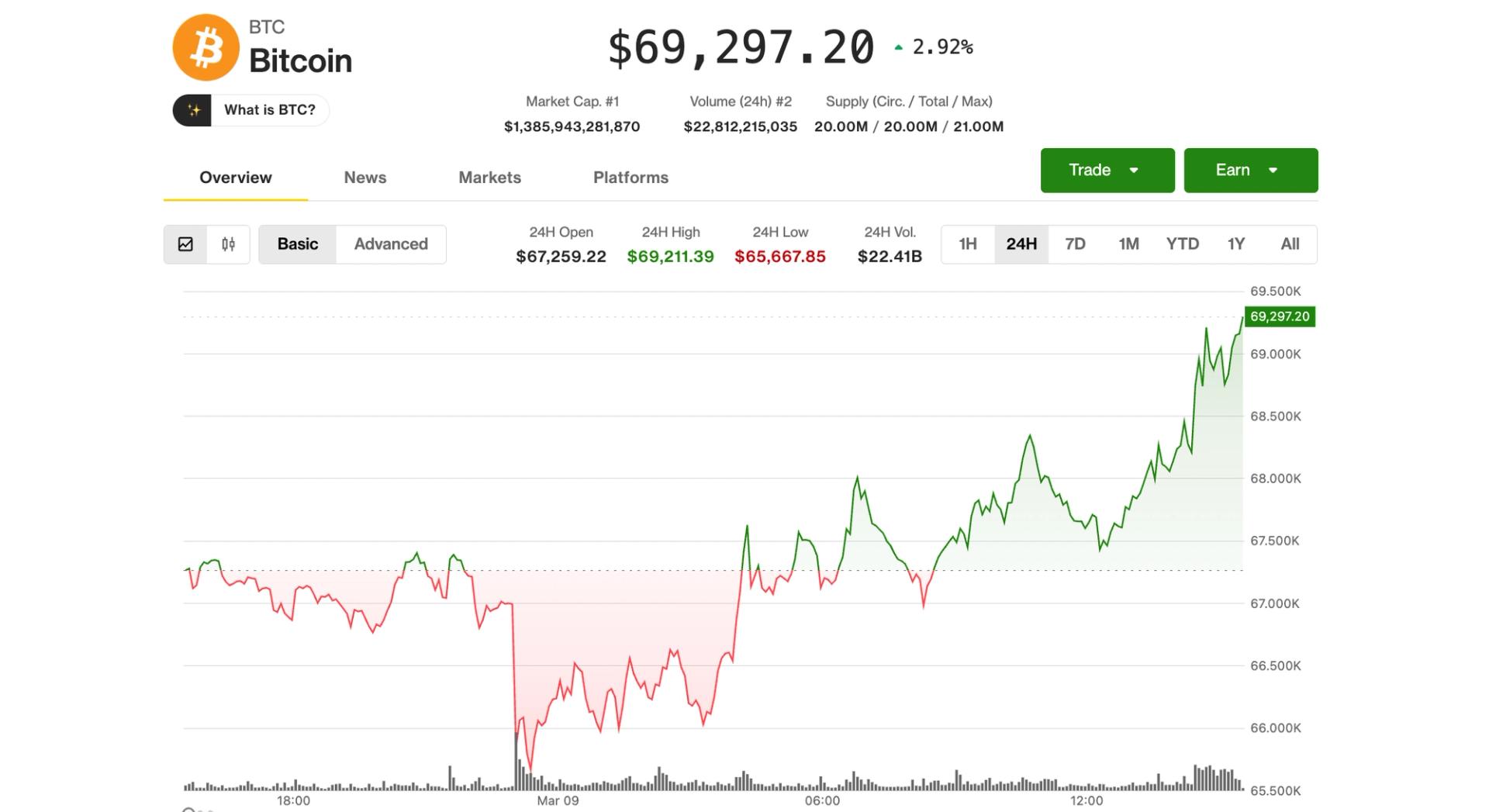
Crypto Climbs as Oil Retreats: Bitcoin Nears $69,000 Amidst Global Market Volatility
Bitcoin staged a remarkable comeback, approaching the $69,000 mark, while crude oil prices cooled down after an overnight surge. This resurgence in digital assets coincided with a rebound in equities, suggesting a possible shift in investor sentiment amid geopolitical tensions and economic uncertainties. But is this a genuine rally or a short-lived reprieve?

Global Tensions, Retail Woes, and Streaming Wars: What's Moving Markets Now
Geopolitical instability, specifically escalating conflict in Iran, rattled markets this morning, coinciding with surprising retail earnings and a potential seismic shift in the streaming landscape. Investors are grappling with the ripple effects across energy prices, consumer spending, and the future of entertainment.