ShannonMax: Optimize Your Emacs Workflow with Information Theory-Driven Keybindings
Emacs power users are always seeking ways to streamline their workflow, and ShannonMax offers a novel approach: information theory-driven keybinding optimization. Created by S. Straus and available on GitHub, ShannonMax analyzes your Emacs usage patterns to identify commands that would benefit from shorter, more efficient keybindings. The core idea is that commands you use most often should have the shortest keybindings, minimizing the overall typing effort.
ShannonMax works by logging your keypresses using a keylogger (with the important caveat to avoid logging sensitive information). After collecting sufficient data, the library analyzes it to determine the 'theoretical length' of each keybinding – how short it should be based on its frequency of use. This analysis compares the actual length of your existing keybindings with the theoretical length, highlighting opportunities for optimization. For instance, a command currently bound to 'x e' (length 2) might be remapped to a single keystroke if its usage warrants it.
To get started, users need to download two files, `shannon-max.el` and `target/emacskeys-0.1.0-SNAPSHOT-standalone.jar`, and place them in the same directory within their Emacs path. The `.jar` file also needs to be made executable using `chmod +x`. Then, the library is initialized by adding `(shannon-max-start-logger)` to your `.emacs` configuration file. After running Emacs for a while, you can verify the logger is working by inspecting the `~/emacs-logged-keys` file. Once enough data is collected, the `M-x shannon-max-analyze` command generates a results buffer showing potential keybinding optimizations.
The results buffer offers several helpful commands: `C-c C-n` and `C-c C-p` to navigate through the results, and `C-c C-e` to globally bind a keysequence (available in Emacs version 29 and later). The library also provides customization options, such as `shannon-max-keypress-cost`, allowing users to define their own cost functions for keypresses, and `shannon-max-alphabet-size`, representing the number of available keys on their keyboard (affecting the theoretical keybinding length calculations).
One important consideration is that certain Emacs packages, like `ido-mode`, can interfere with ShannonMax's keylogger. The library relies on `real-last-command` and `this-command-keys-vector` within the `post-command-hook` to accurately log commands. Users experiencing issues with command logging may need to investigate potential conflicts with other installed packages. Additionally, the author acknowledges that ideally, keymaps should be computed separately for each major/minor mode, but implementing this correctly requires careful consideration.
ShannonMax is an open-source project, and the developer encourages users to provide feedback and suggestions for improvement. The project repository on GitHub ([https://github.com/sstraust/shannonmax](https://github.com/sstraust/shannonmax)) is the best place to report issues and contribute ideas. A related talk explaining the underlying principles of ShannonMax is available on YouTube ([https://www.youtube.com/watch?v=MytPttbIUOY](https://www.youtube.com/watch?v=MytPttbIUOY)).
By intelligently applying information theory to Emacs keybindings, ShannonMax offers a compelling approach to optimizing your editing workflow and potentially saving significant time and effort. While some configuration and troubleshooting may be required, the potential benefits for serious Emacs users are considerable.
Alex Chen
Senior Tech EditorCovering the latest in consumer electronics and software updates. Obsessed with clean code and cleaner desks.
Read Also

Anthropic's Claude Code Unlocks Hands-Free Programming with Voice Mode
Anthropic is pushing the boundaries of AI-assisted coding, introducing a voice-activated interface for Claude Code. This new feature promises to revolutionize developer workflows, allowing for more natural and intuitive interaction with the AI coding assistant.

Agent Bar: Integrate Claude Code Directly into Your macOS Menu Bar for Seamless AI Assistance
Anthropic's Claude AI is now more accessible than ever thanks to Agent Bar, a new macOS application that puts Claude's coding capabilities right at your fingertips. This innovative tool allows users to run Claude code directly from their menu bar, streamlining workflows and enhancing productivity. Early adopters are already praising its ease of use and potential for code generation and debugging.
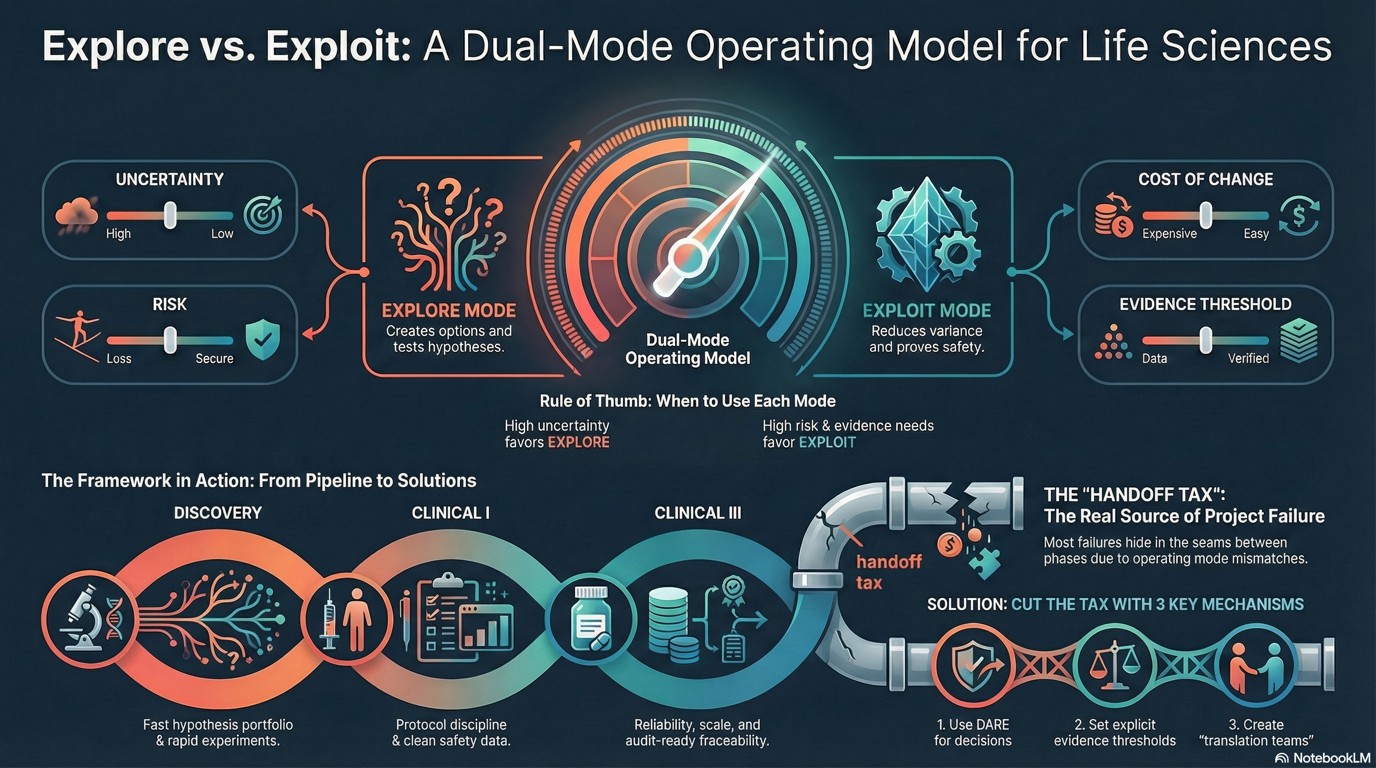
Adaptation vs. Optimization: Mastering the Agile Balancing Act for Speed and Stability
In today's rapidly evolving tech landscape, teams often find themselves polarized between prioritizing rapid adaptation and rigorous optimization. Agile pioneer Jim challenges this binary thinking, advocating for a dynamic approach that balances both modes to achieve true efficiency. Learn how to manage the inherent tension between exploration and exploitation to maximize speed and minimize costly handoffs.